
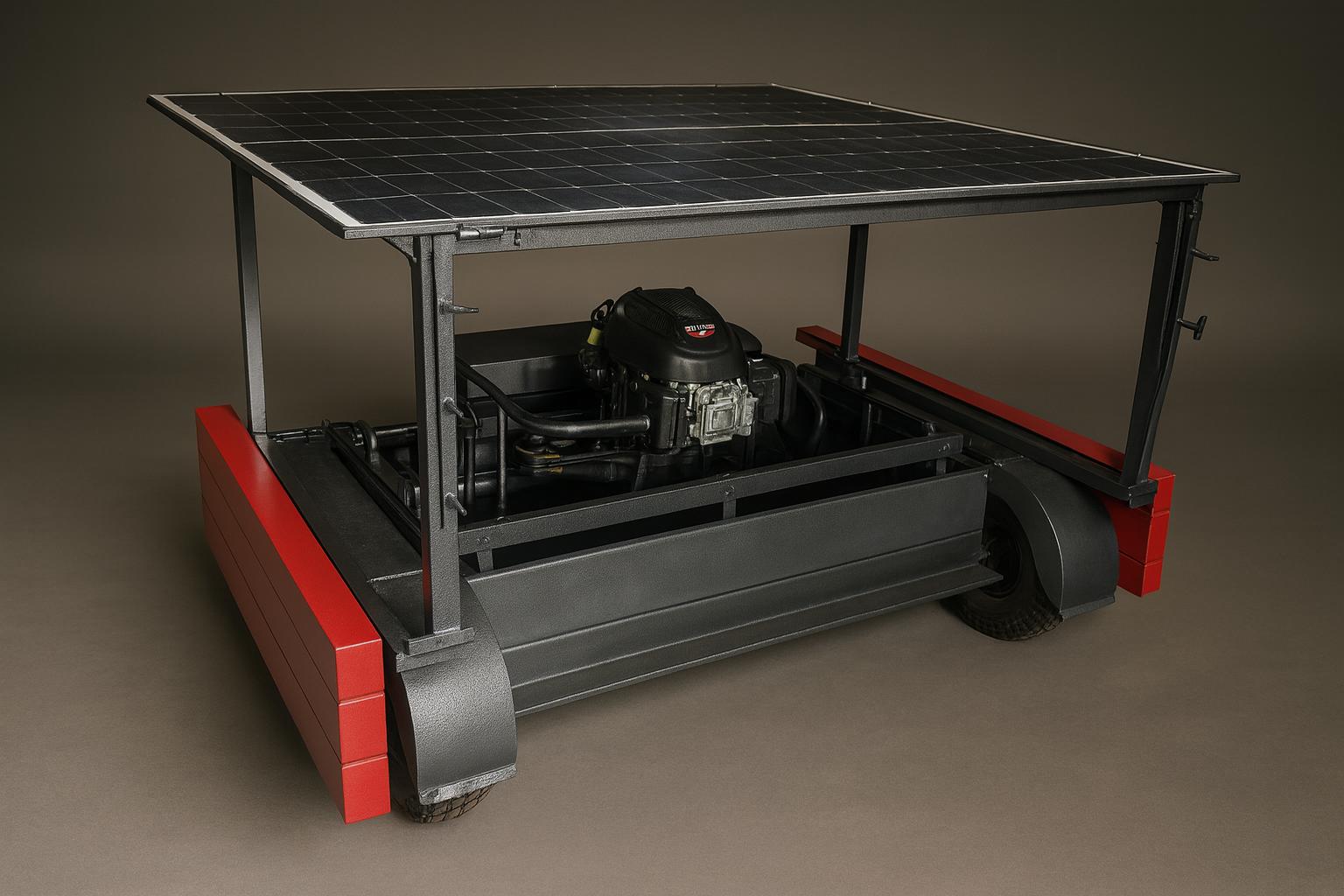
The agricultural robot is no longer science fiction: there is consolidated research, prototypes under validation, and a growing number of initiatives — academic, institutional, and startups — aiming to solve real field problems in Brazil with automation. This article is an honest panorama: what already works, what is being tested, and where the Caatinga Rover fits this scenario.
What works today
High-tech agricultural robotics already operates commercially in specific crops — sugarcane, coffee, large mechanized plantations — typically with large, expensive equipment beyond the reach of most family farming and small to mid-sized properties. The Embrapa maintains a robotics research program in agriculture aimed at this type of high-technology application.
The gap: small to medium property, uneven terrain
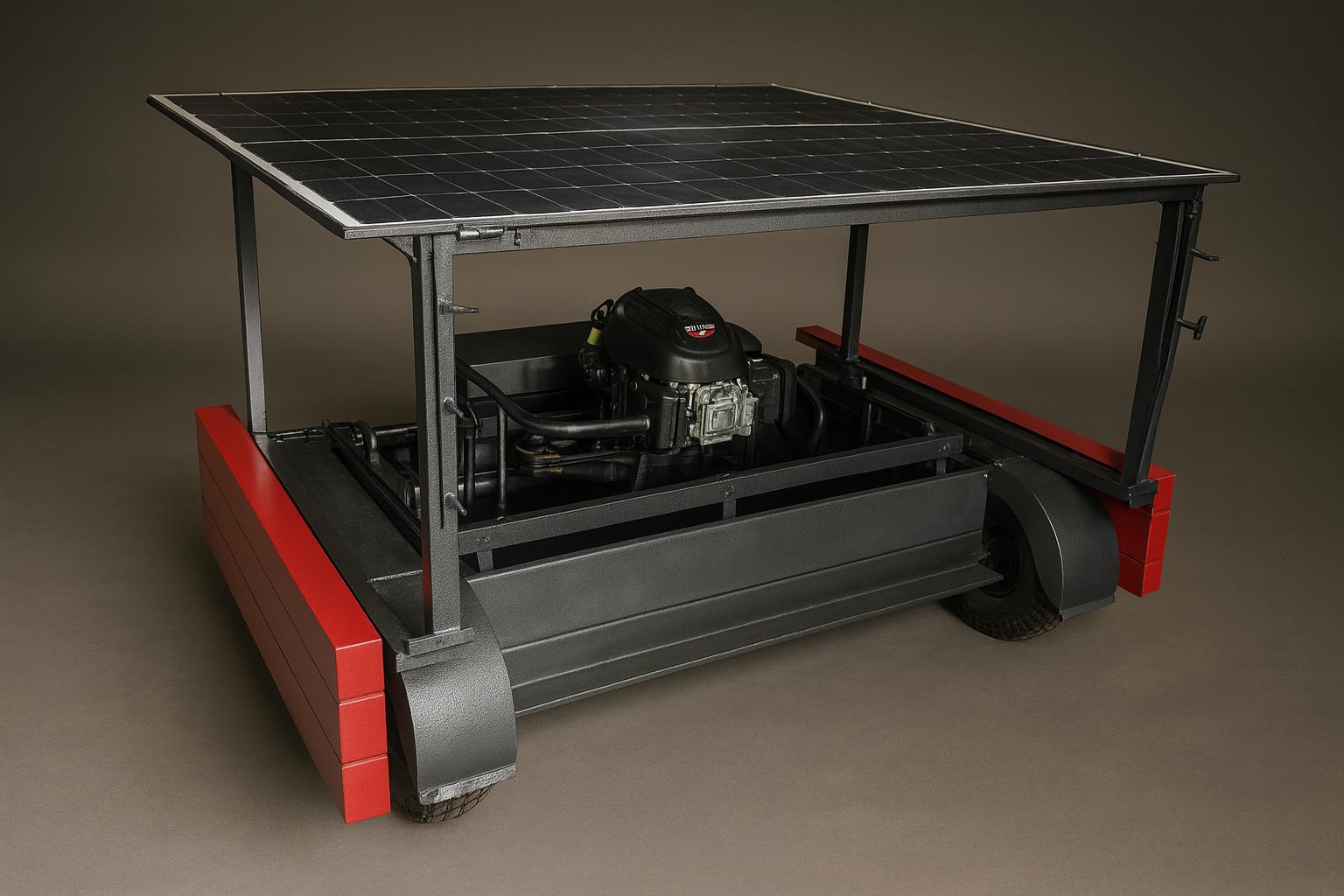
For the family farmer in the semi-arid region or areas with uneven terrain, without a prepared internal road, large-scale solutions do not apply well — neither in scale, nor in cost, nor in suitability for the terrain. This gap guides the development of the Caatinga Rover: an electric 4×4 platform, with photovoltaic support, designed from the outset for the irregular field terrain of the Northeast, not retrofitted later.
How much does an agricultural robot cost
There's no single answer—the cost varies greatly depending on the size, level of autonomy, and the technological maturity (TRL) of the equipment. A prototype under validation, such as the Caatinga Rover at TRL 5, has no defined commercial price yet, because it is not in a sale phase: price, lead time, and commercial terms will be disclosed only when the product is sufficiently validated, as described in the page of Access strategy (direct sale, rental, robot as a service).
Where the Caatinga Rover is now
In TRL 5: prototype validated in a relevant environment, with field pilots underway — including vegetation management at solar plants, described in Vegetation management in solar plants — and technical articulation with institutions such as IFCE, detailed in Customers and Partners.
Learn more: Get to know Caatinga Rover · Implements · Validation and safety