Manual operation
Reference Estimativa de cenário- Speed
- 0,4–0,6 ha/h
- Operational cost
- R$ 180–250 per ha
- Human intervention
- ~3,5 hrs/ha
- Operational risk
- High

A 4×4 electric, modular robotic platform in field validation, developed to support tasks such as mowing, localized spraying, light transport and monitoring between crop rows.
Configure o Caatinga Rover para roçagem, pulverização localizada, transporte leve ou monitoramento. Antes do piloto, avaliamos sua tarefa e indicamos o implemento mais adequado.
Encontrar a aplicação ideal CompatibilidadeAnalisamos terreno, espaçamento, inclinação, obstáculos, carga e rotina de trabalho para verificar a viabilidade técnica antes do piloto.
Avaliar minha área ViabilidadeComparamos o processo atual com um cenário de uso do robô para estimar tempo, custos, esforço humano e capacidade operacional.
Estimativa para validação Simular operação Implantação e suportePlanejamos o piloto, orientamos a equipe e acompanhamos funcionamento, manutenção e resultados durante a validação.
Conhecer o processoSee how assisted teleoperation and the autonomous goal compare to manual operation and the small tractor in tasks such as localized spraying, inter-row mowing, and crop monitoring.
T0–T3 representam modos operacionais e não níveis TRL. T2 descreve a configuração teleoperada atual; T3 é uma meta ainda não validada. O resultado pode variar conforme implemento, cultura, terreno e protocolo de ensaio, sem garantia de custo ou desempenho.
Consulte a metodologia →Provide your own costs and see in real time the estimated automation potential for repetitive tasks. It is your scenario hypothesis — not a promise of savings, price, or timeline, since the Caatinga Rover remains in technical validation.
After testing the numbers, request a technical assessment to understand how they apply to your real context.
Open full simulator Entenda como essa estimativa é calculada →Family farming comprises 3,897,408 establishments in Brazil and employs 10.1 million people, according to the 2017 Agricultural Census. In this scenario, labor shortages add to repetitive and heavy tasks, worker exposure to physical strain and to agricultural chemicals, rising operating costs, and the difficulty of mechanizing small and medium plots.
The Caatinga Rover is designed to address this scenario with modular automation: a robotic base that accepts different implements and adapts to the crop, terrain, and operational needs of each property.
Source: IBGE, Agricultural Census 2017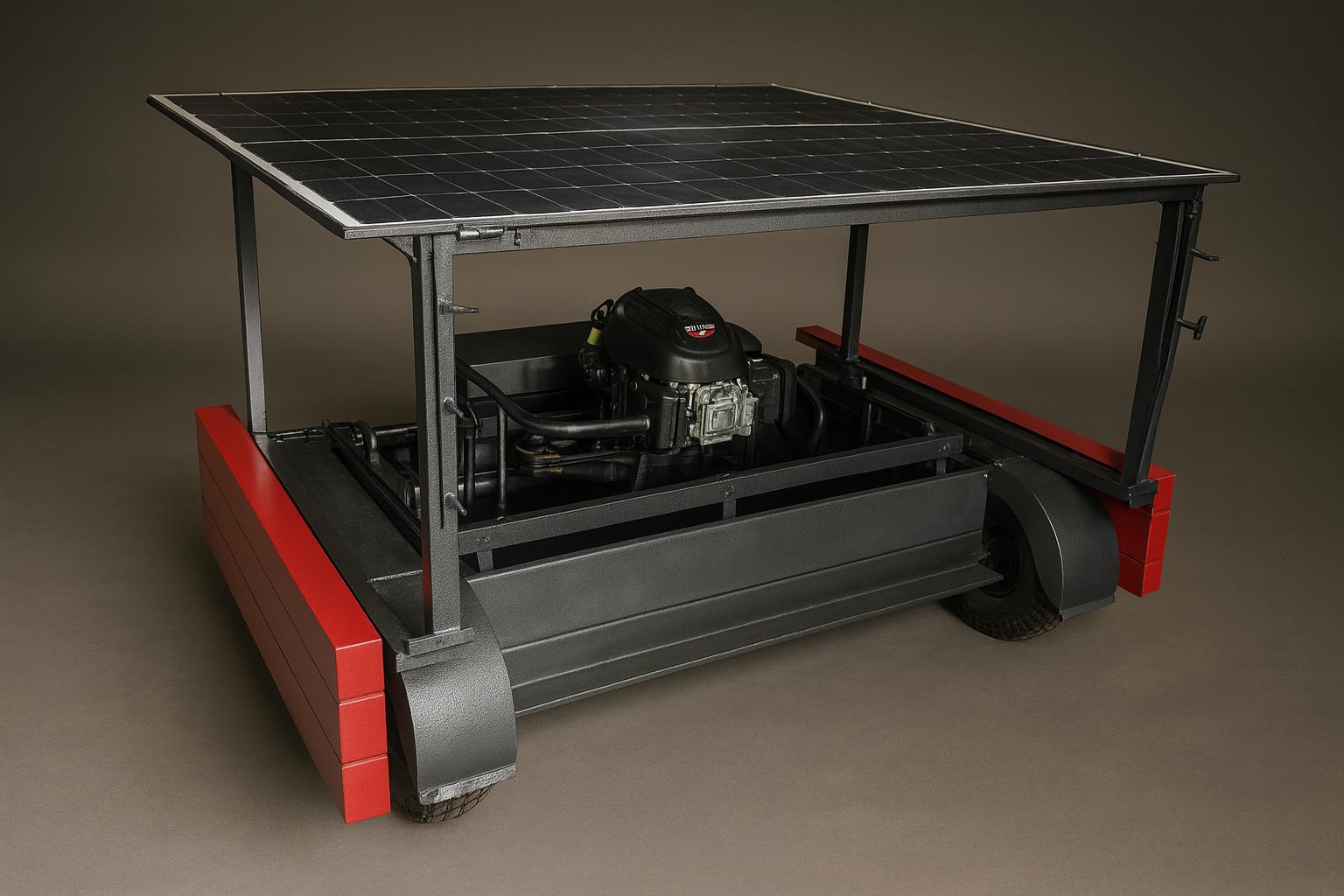
Reduces the physical effort of one of the most repetitive field tasks. The robot operates between crop rows, freeing workers for higher-value activities.
Applies pesticides with greater precision and reduces the worker's direct exposure to the product — one of the top operational risks on small properties.
Moves inputs, tools and harvests within the property, eliminating repetitive manual trips on irregular terrain.
Traverses crop rows and records images to support management decisions — without the producer having to walk the entire area.
The first pilot tested vegetation control under solar modules, reducing manual work. Still in initial validation — no commercial offering at this stage.
The modular platform is open for technical and agronomic tests with universities, institutes, and cooperatives that want to build application protocols.
4×4 electric chassis, solar support, remote control and initial implements already in field tests.
We are moving from prototyping to controlled field validations: navigation, safety, sensing and agronomic validation of the implements, seeking partners and test sites.
Large-scale production will be evaluated only after technical qualification, applicable certification, and operational demonstration with partners.
A agricultura familiar continua sendo o foco principal, com aplicações como roçagem entre linhas, pulverização localizada, transporte leve e monitoramento de lavoura. Um primeiro piloto O&M também está estruturando a validação do manejo de vegetação em uma usina solar — um mercado complementar, ainda sem resultados finais publicados.
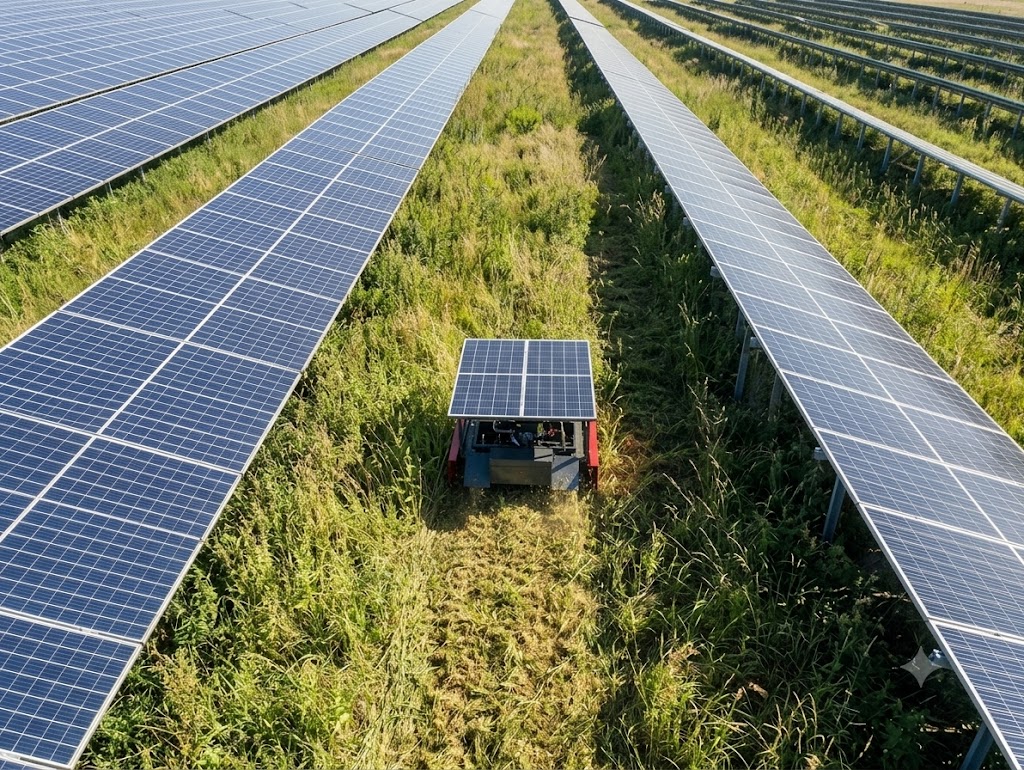
O primeiro protocolo O&M avalia manejo de vegetação sob estruturas fotovoltaicas. Desempenho, segurança, economia e durabilidade ainda serão medidos, sem oferta comercial nesta fase.
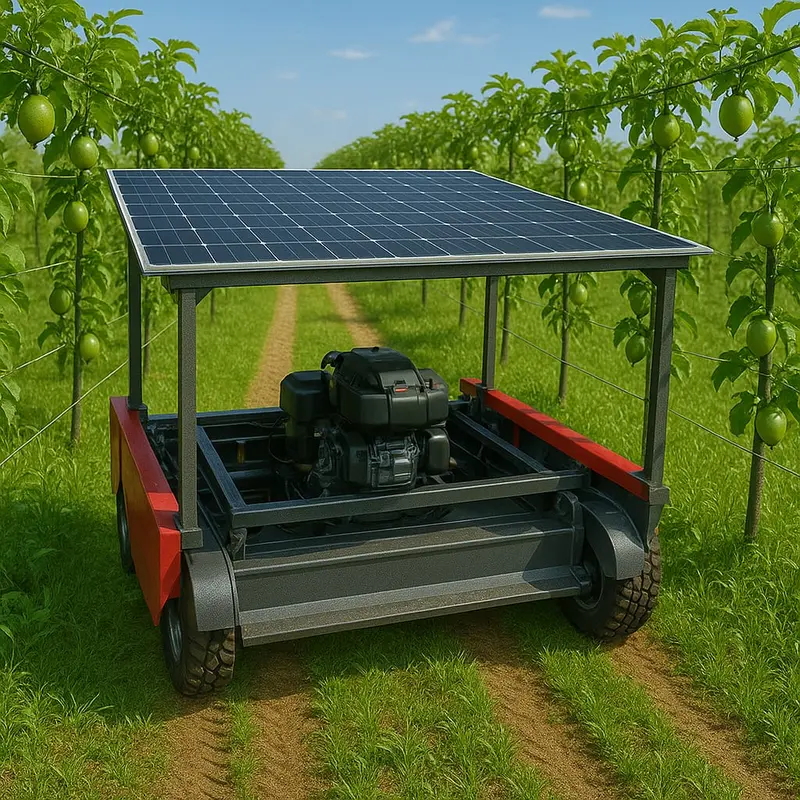
Validation of the platform and mower implement between rows, localized spraying, light transport, and real-field monitoring.
Solar-powered electric vehicle for spraying and mowing, authored by João de Moura Cardoso, was one of 20 inventions awarded in the 1st National Contest for Inventions focused on Family Farming, among 242 registrations.
Proposed technical plan. It does not represent approved funding or an available commercial product.
The proposal foresees collaboration with Embrapa, IFCE Fortaleza, IFCE Tauá, Ematerce, and family farming cooperatives. Technical and institutional responsibilities depend on formal instruments still under construction; therefore, these organizations are not presented as confirmed partners.
Learn about the proposed method and responsibilities →Purchase of the platform after technical qualification, applicable certification and production definition — not yet available.
Model to be structured with cooperatives and associations to reduce the investment barrier.
Operation on demand to be tested in pilots. Ideal for those who want to validate the benefit before deciding on acquisition.
Producers, cooperatives, research institutions, companies, and innovation projects can request contact for demonstrations, technical field validation, or partnership.