Brazilian agricultural robotics

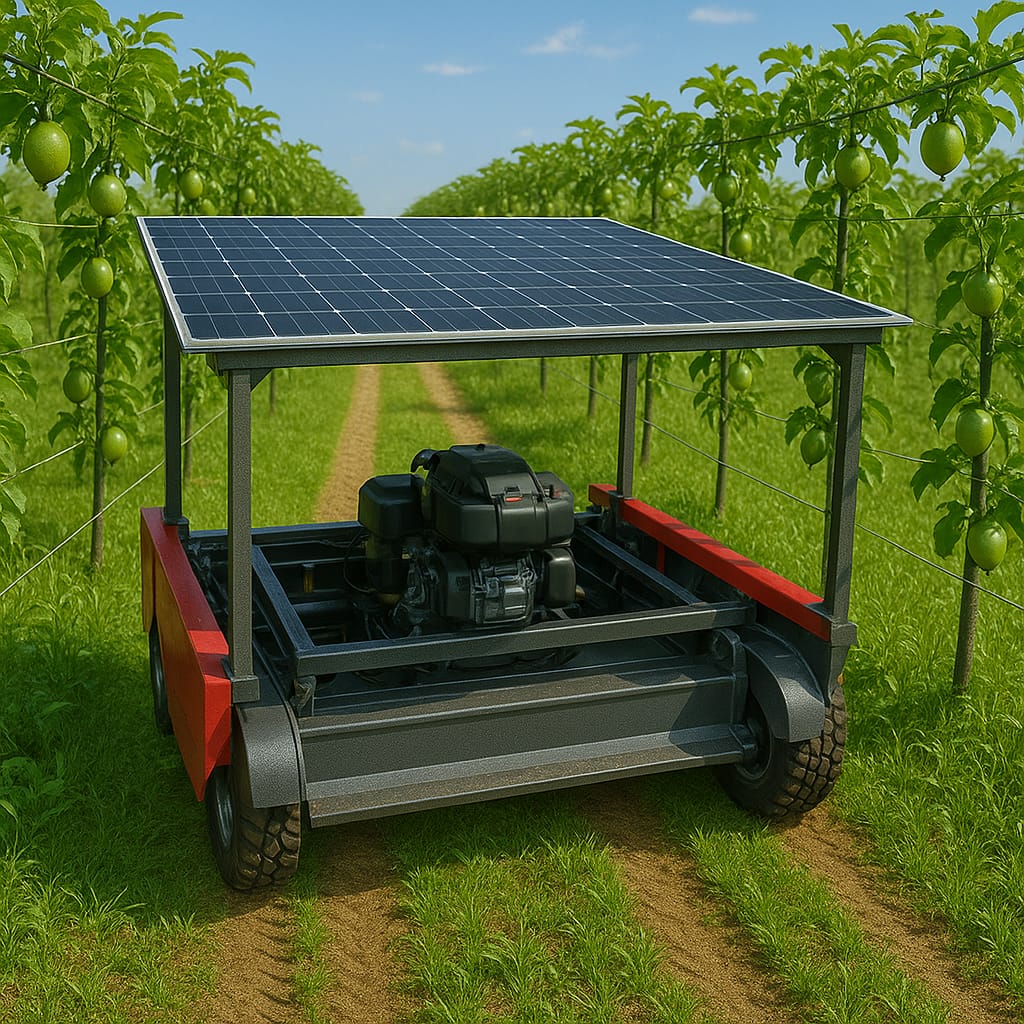
Caatinga Rover: a robotic base for different field tasks

Modular 4×4 platform that integrates mobility, energy, implements, and progressive evolution from manual operation to assisted navigation.

Prototype TRL 5Multi-implement platformAssisted navigation
Platform architecture

One platform, two layers

The physical base performs the work. The control layer organizes the operation, records routes, and prepares the system's technical evolution.

01
Base physical

the muscle

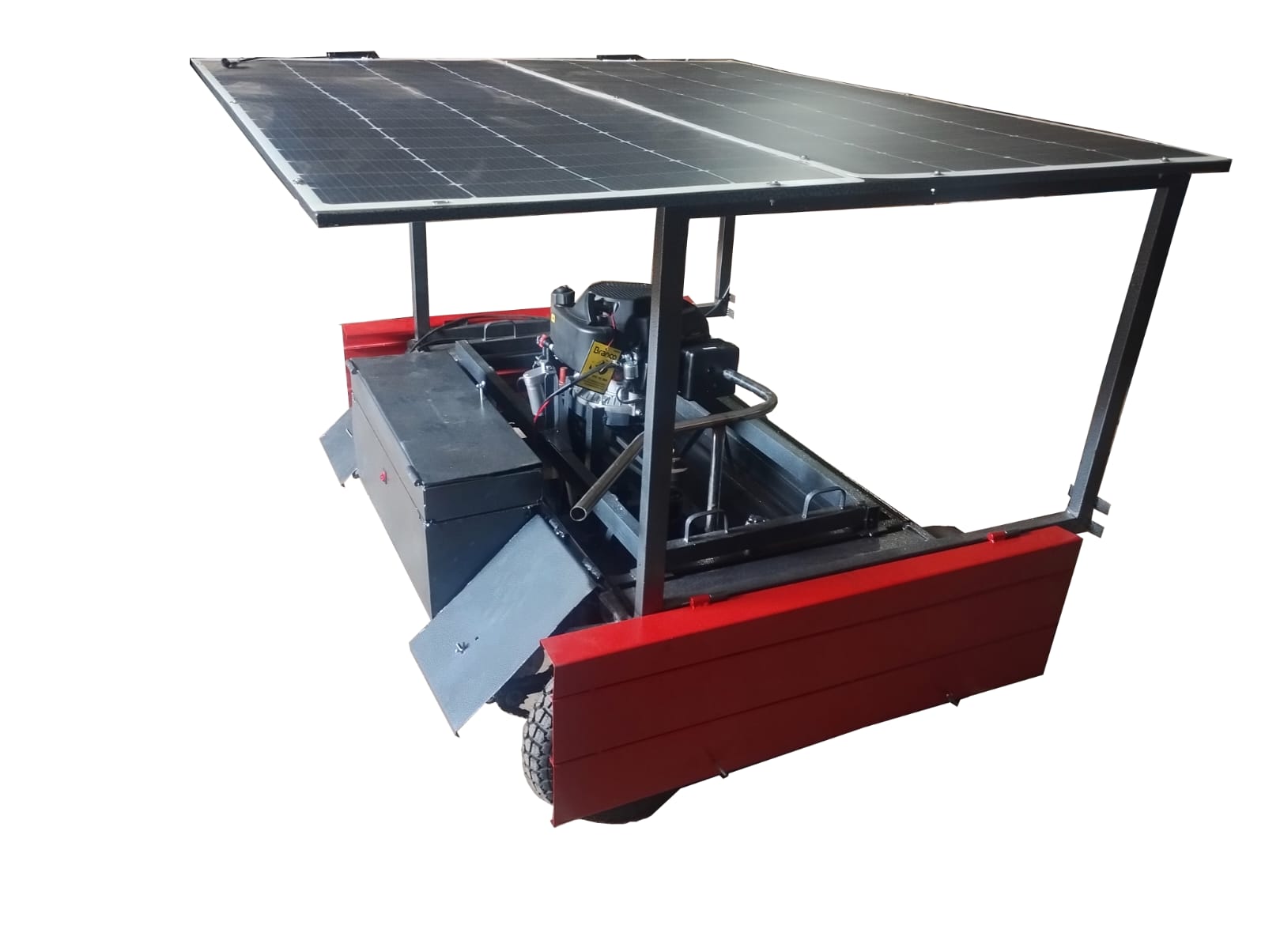
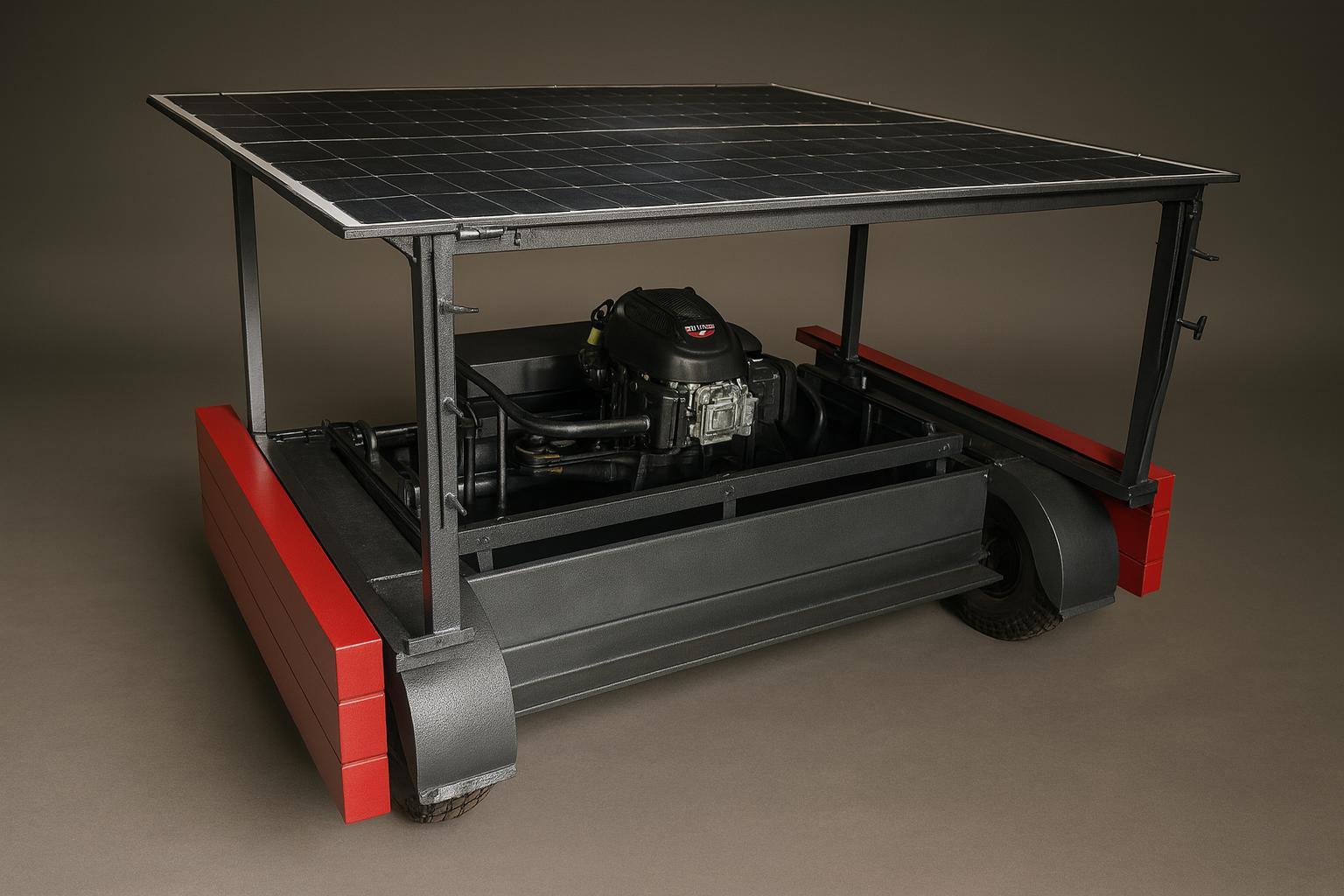
Structure that concentrates mobility, energy, and the ability to receive tools for different tasks.

  • Modular chassis
  • 4x4 traction
  • Onboard power system
  • Interface for implements
02
Control and evolution

the brain

Layer that connects analog control, route recording, human supervision, and future localization and safety resources.

  • Control and recording of route
  • Remote supervision and intervention
  • GPS RTK/IMU as goal
  • Security, telemetry and data
Capabilities by stage

Functions of the robotic base

Each function is identified by the real stage to distinguish current capacity, validation, and development.

Available in prototype

4x4 mobility

Mobile base for movement under real field conditions

Available in prototype

Analog control

Direct operation by the operator during manual operation and route teaching.

In validation

Route recording

Record and storage of the path taken on the first pass

In validation

Supervised repetition

Execution of the recorded route with supervision and possible intervention.

Available in prototype

Remote intervention

Operation halt and control resumed by the operator when needed.

Available in prototype

Onboard energy

Energy system with integrated photovoltaic support into the structure

Available in prototype

Modular architecture

Chassis prepared to receive implements according to the agricultural task

Development goal

Telemetry and mapping

Data logging, sensing, and georeferenced monitoring of the operation.

Controlled evolution

Human supervision remains central in the current stage. Autonomous features advance only after integration and safety testing.

T1Available in prototype

Manual control

Operator directly controls via analog control and bears full responsibility for movement.

Direct drive
T2In validation

Assisted navigation

The route taught by the operator is recorded and can be repeated under supervision, with remote stop or resume.

Teach and repeat
T3Development goal

Point-based autonomy

Missions planned by points with RTK/IMU location, geofence, speed limits, and obstacle detection.

Not available at this stage
Mode T2

How the recorded route works

Repetition does not eliminate supervision nor include autonomous obstacle deviation at the current stage.

  1. Operate with analog control
  2. Record route
  3. Identify and store the route
  4. Select recorded route
  5. Repeat under supervision
  6. Interrupt or resume
Conceptual interface · in development

Future mission by points

T3 vision enables organizing waypoints, reviewing the mission, and tracking progress. The drawing demonstrates the concept and does not represent available software.

Explore the technology architecture →
One base, different tasks

Implementa ecosystem

View the full implements page →
Prototype under validation

Mower implement

Prototype under validation

Sprayer

In development

Transport platform

In development

Quick coupling

In development

Sensing and mapping

In development

Robotic arm

No implement is presented as a certified product or available for purchase at this stage.

Evidence before scaling

Provable today, under validation and future target

Proof today

TRL Base 5

  • 4x4 mobility
  • Analog control
  • Remote intervention
  • Modular architecture
In validation

Assisted operation

  • Route recording
  • Route storage
  • Supervised repetition
  • First implements
Future goal

Point-based autonomy

  • GPS RTK and IMU
  • Obstacle detection
  • Geofence and limits
  • Telemetry and mapping
Safety principle

The assisted navigation requires supervision. Obstacle detection, geofence, and autonomous decisions are not assigned to the current mode and require integration, testing, and safe-stop criteria.
FAQ

Understand the Caatinga Rover stage

Direct responses about operation, autonomy, and demonstrations

Is Caatinga Rover autonomous yet?

Not in full. The current stage combines manual control and validation of recorded routes under supervision. Point-by-point autonomy is still under development.

How is a route created?

The operator traverses the route with the analog control. The system records and stores this path for supervised repetition later.

Does the robot steer around obstacles by itself?

Not in the assisted mode yet. Obstacle detection and automatic safe stop are part of planned evolution.

Which implements can be used?

Mower and sprayer are in validation. Transport, quick coupling, sensing, and robotic arm are under development.

Is the robot available for purchase?

Not at this stage. The project receives requests for demonstrations and proposals for test areas compatible with its technical stage.

Usage-driven demonstration

See how the platform can be evaluated in your reality

Present the task, the crop, and area conditions for an initial analysis.

Request a demonstration