
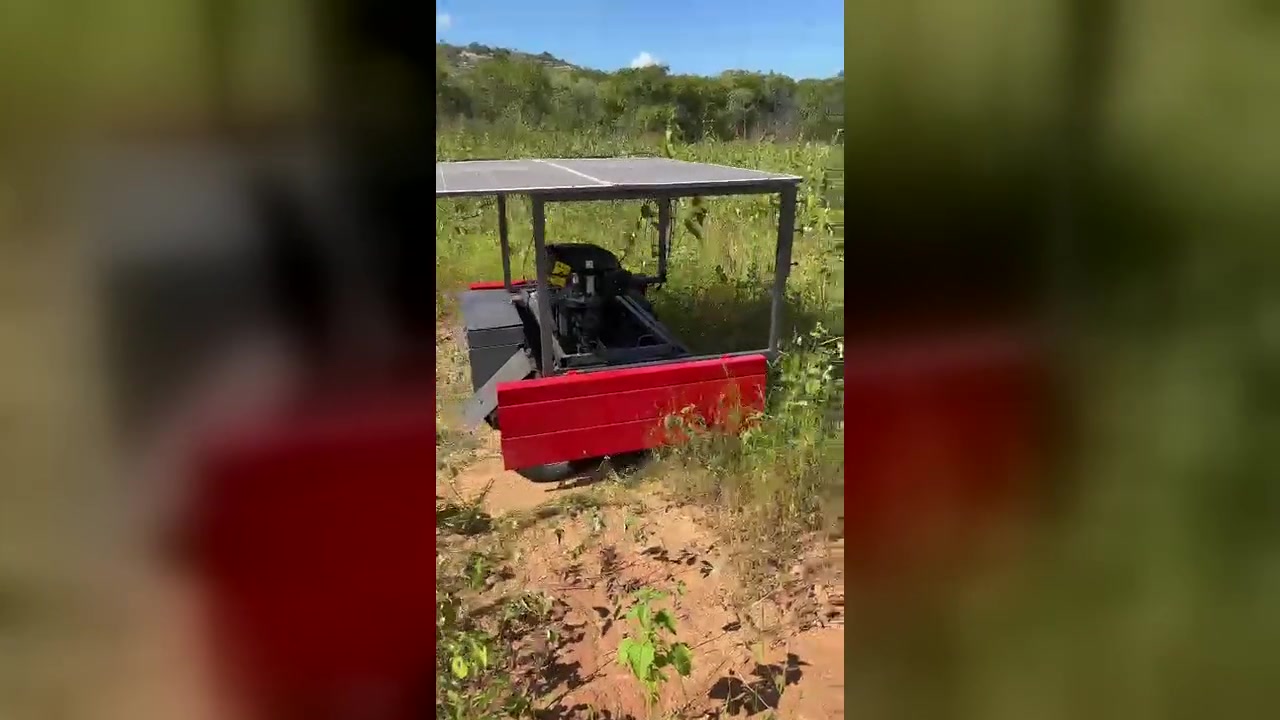
The question arises whenever a robot is discussed in the field: will that take someone's job? It's a fair question, and deserves an honest answer rather than a slogan. The thesis behind the Caatinga Rover it is not about reducing the number of people working in the field — it is about taking people out of the most repetitive and exposed tasks, and using the efficiency gains for the business to grow and hire more, not less.

Why this question is different in the field
Much of the resistance to agricultural automation comes from cases where technology truly meant job cuts, especially in large mechanized farms. The family farming scenario and small to medium properties is different: the most common issue reported by producers is not excess labor, but lack of available labor for repetitive and heavy tasks, especially among younger workers.
The thesis: efficiency finances growth, not substitution
When a repetitive task — mowing, spraying, transport — consumes fewer hours of manual labor, two things can happen: the operation reduces headcount, or the operation uses the freed time and cash to grow, open new cultivation areas, add new service, or qualify those who work there for higher-responsibility roles. The second option is the thesis guiding the Caatinga Rover development: not we present the product as a substitute for a worker, and we will never state that — it is a explicit stance, not just marketing.
What this means in practice, today
In TRL 5, the Caatinga Rover is still in field validation, not in full commercial operation. We do not have our own data on job creation to cite here—it's premature to claim a result that hasn't been measured yet. What can be stated is the positioning: any product material avoids language of 'substitution' and uses 'support' and 'reduction of operational effort', consistent with what is already described in the Caatinga Rover page.
Dignity is part of the same conversation
Removing a person from a dangerous or exhausting task is not the same as removing their job — it changes what they do. This specific angle is developed in the article Dignity in rural work.
Learn more: Get to know Caatinga Rover · Business model