
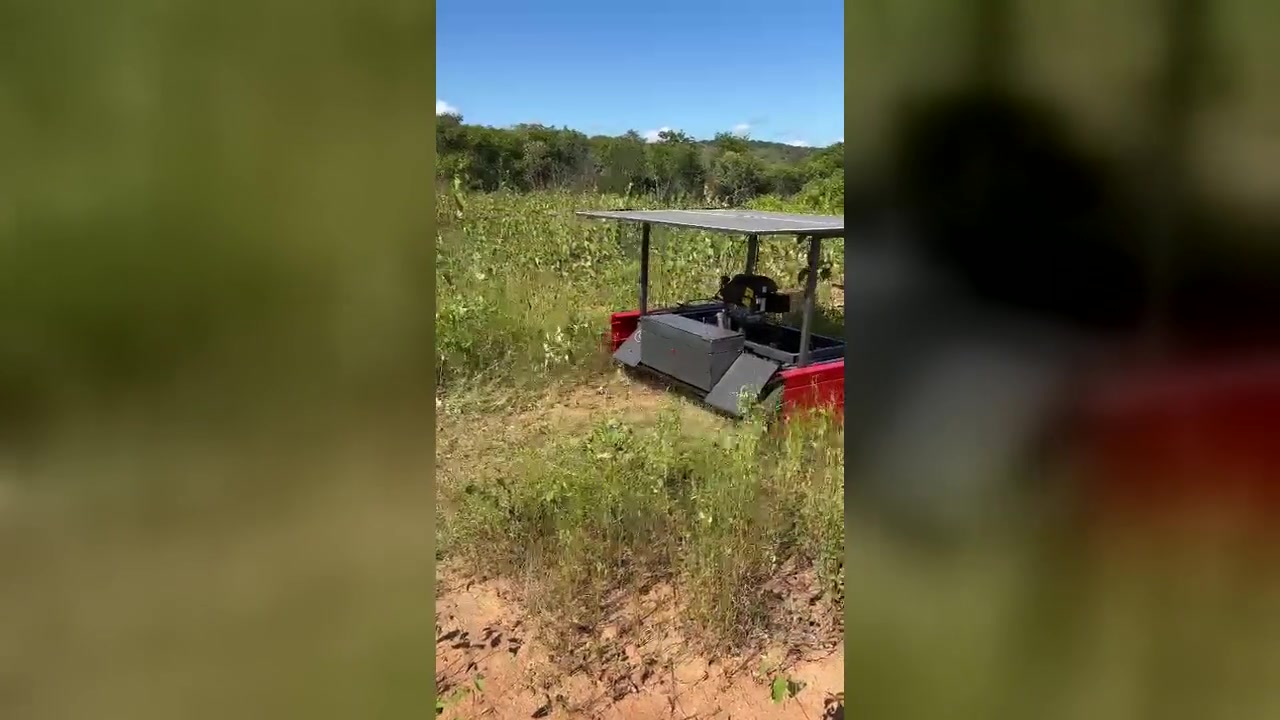
If you reached here after reading about what the Caatinga Rover it already does, and what is still under validation, the next question is usually practical: how do I propose a test in my operation? This article answers that directly, no fluff.

What "testing" means at this stage
In TRL 5, testing the Caatinga Rover means participating in a supervised pilot operation — real-world use, with technical oversight, to generate field evidence — and not a commercial purchase or standardized rental, which is not yet available. Interconnect, a solar plant operation and maintenance company, is an example of a field pilot already underway, detailed in Customers and Partners.
Who can propose a pilot
- Farmers and cooperatives with area and repetitive task compatibility (mowing, spraying on trellis/vine, transport).
- O&M companies of solar plants, for vegetation management under photovoltaic modules.
- Educational and research institutions, for technical collaboration in robotics, energy and instrumentation — as described in the Validation page.
The path to demonstration
- Tell your area and task: crop or application, area size, land type.
- Technical alignment: our team assesses whether the application is compatible with the current prototype stage.
- Supervised pilot: field operation with technical supervision and evidence recording.
- Structured return: documented result, no prior promise of specific performance.
What we do not promise in this phase
We do not state sale price, commercial delivery lead time, or guaranteed savings — the prototype is under validation, not in a commercial phase. The access models to be evaluated after validation (direct sale, rental, robot as a service) are described on the page of Access strategy.
Ready to propose a pilot? Talk to the team · Get to know Caatinga Rover