
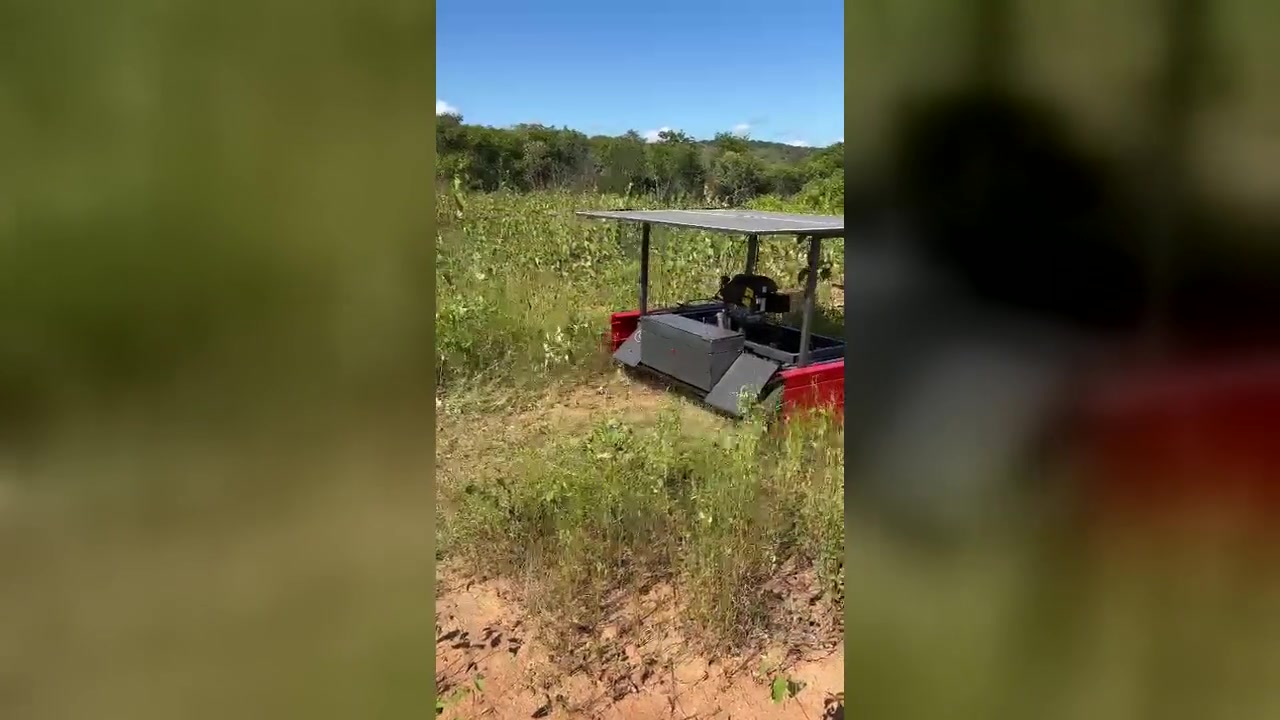
Developing an agricultural robot requires carefully separating three timeframes: what we already observe, what we are building, and what we aim to achieve. Blending these stages can create an impression of readiness the project does not yet have. This record presents Caatinga Rover as it stands today: a functional prototype in TRL 5, with field lessons and a still extensive technical agenda.
What it means to be at TRL 5
TRL is a scale used to describe the maturity of a technology. At level 5, components and subsystems have been integrated and tested in a relevant environment. This is more advanced than an isolated lab proof, but still distant from a qualified solution for regular manufacturing and commercial operation.
In Caatinga Rover, this stage corresponds to a functional chassis with electric 4×4 traction, solar power support, remote control, and initial implements undergoing field tests. The tests help observe displacement, mechanical behavior, energy integration, and execution of initial tasks.
Proof today
The prototype can move in field environments under remote command and supports the physical integration between the chassis, traction, onboard power, and initial implements. The in-house workshop allows manufacturing chassis parts, welding, altering mounts, and testing new configurations without relying entirely on external suppliers.
These evidences show capacity to build and iterate. They do not yet demonstrate agronomic productivity, definitive energy autonomy, useful life, certified safety, or economic viability. Each of these answers requires specific testing.
In development
The next layer of engineering includes navigation in ROS2, GPS RTK and IMU fusion, obstacle perception, and safe stop. Improvements are also planned in energy management, sensing, data logging, and implement coupling interface.
ROS2 provides an architecture suitable for organizing localization, control, and perception modules, but adopting the technology does not eliminate risk. Dust, shade, signal loss, vibration, uneven terrain, and vegetation interfere with sensors. The system must respond predictably when information available is insufficient.
30-month proposed plan
The technical roadmap is organized to advance the project from TRL 5 to TRL 8 within up to 30 months. The first phase focuses on prototype auditing and requirements. Next come energy, navigation, safety, and consolidation of implements. Subsequent stages include a pilot batch, validation at different sites and harvests, engineering reviews, and pursuing applicable trials and certifications.
This schedule is a development proposal. It does not represent approved funding, formalized partnership, or guarantee that each result will be achieved within the initially estimated timeline. Progress between levels depends on evidence generated at each stage.
Validation before scale
Caatinga Robotics is coordinating with scientific, extension services, and farmer organizations to structure validation. Until there are signed instruments, these organizations are not presented as confirmed partners. The same caution applies to manufacturing and market: commercial production is a later stage after technical and regulatory qualification.
Upcoming records in this Field Diary will show tests, changes, and limits found. Sharing also what needs to be corrected is part of the work. Trust in the Caatinga Rover should come from the quality of the evidence, not the size of the promises.
How learnings will be documented
Each test cycle should relate the prototype configuration, location, terrain type, duration, task performed, and observed occurrences. Hardware or software changes must be identified so that results from different versions are not treated as if from the same equipment. Photographs, videos, and technical records help preserve this history.
When a goal does not yet have protocol or sufficient samples, it will be presented as a goal. When there is only an initial observation, it will be described as an observation. Only results repeated under predefined criteria can support a conclusion. This organization makes the Field Diary useful for the engineering team, for potential validation institutions, and for external project observers.